
01The problem starts with what remains published.
Training materials, terms and conditions, statutory paperwork and other PDFs remain online long after their original publication. Some still state current information, while others preserve an accurate point-in-time record or contain facts that no longer apply.
The organisation first needs to establish which PDFs remain published and where they appear. Only then can it distinguish records that must remain, information selected for conversion to HTML and old or redundant PDFs that can be removed.
02PDF information can carry more weight in AI answers.
AAAnow research compared identical content presented as a PDF page and as a web page, finding that AI systems assigned the PDF version 1.44 to 1.8 times the authority of the web version. Here, authority means the greater trust and relevance AI assigns to PDF information when selecting and using it.
AI can apply that extra weight to information that is old, incorrect or poorly presented. Greater authority does not make the information accurate or current.
AAAnow has spent more than 25 years assessing the web from the outside in, building a record of 3.7 trillion data points from nearly 120 million websites. Its work includes nearly 40 agents built to examine PDFs and how AI reads them.
Read the research paper, Where Authority Sits.
03Find the PDFs before selecting information for conversion.
Within an agreed scope, the Platform discovers, catalogues and indexes PDFs on the organisation’s websites and sites run by partners and agents. Discovery does not mean conversion; the complete collection does not need converting.
The Platform uses its proprietary algorithm to prioritise PDF information according to content value, user consumption and position on site. In plain terms, the Platform considers the value of the information, how people use it and where it appears on the site before information is selected for conversion.
04A PDF can look correct while its information is misread.
A finished PDF can look correct to a person even when its titles, headings and structure do not present the information correctly to AI. Before conversion, the Platform checks those elements in each selected document and considers how AI interprets them.
Regulatory inquiries followed the misfiling of statutory paperwork where PDFs were used. The document structure was incorrect, headings were not properly applied and all financial data was misrepresented.
05Convert selected information into HTML.
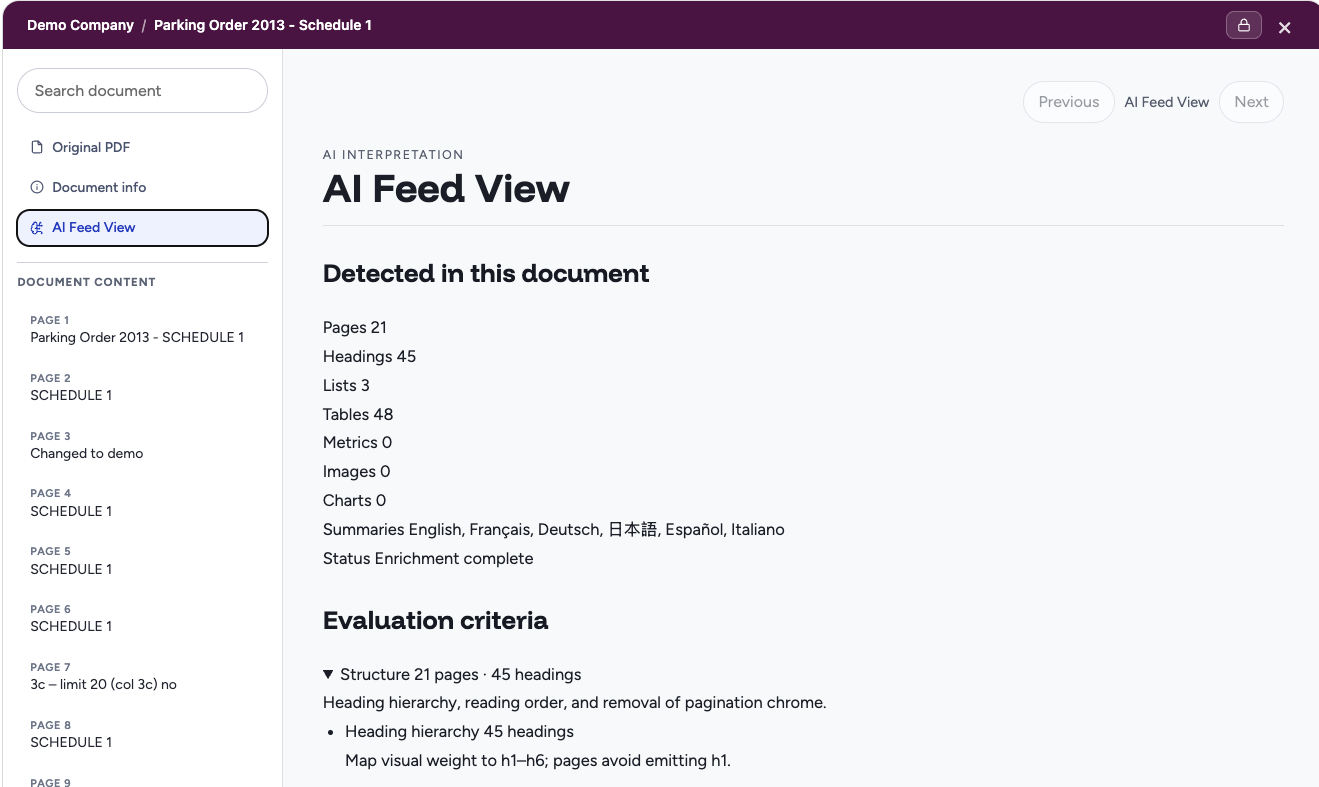
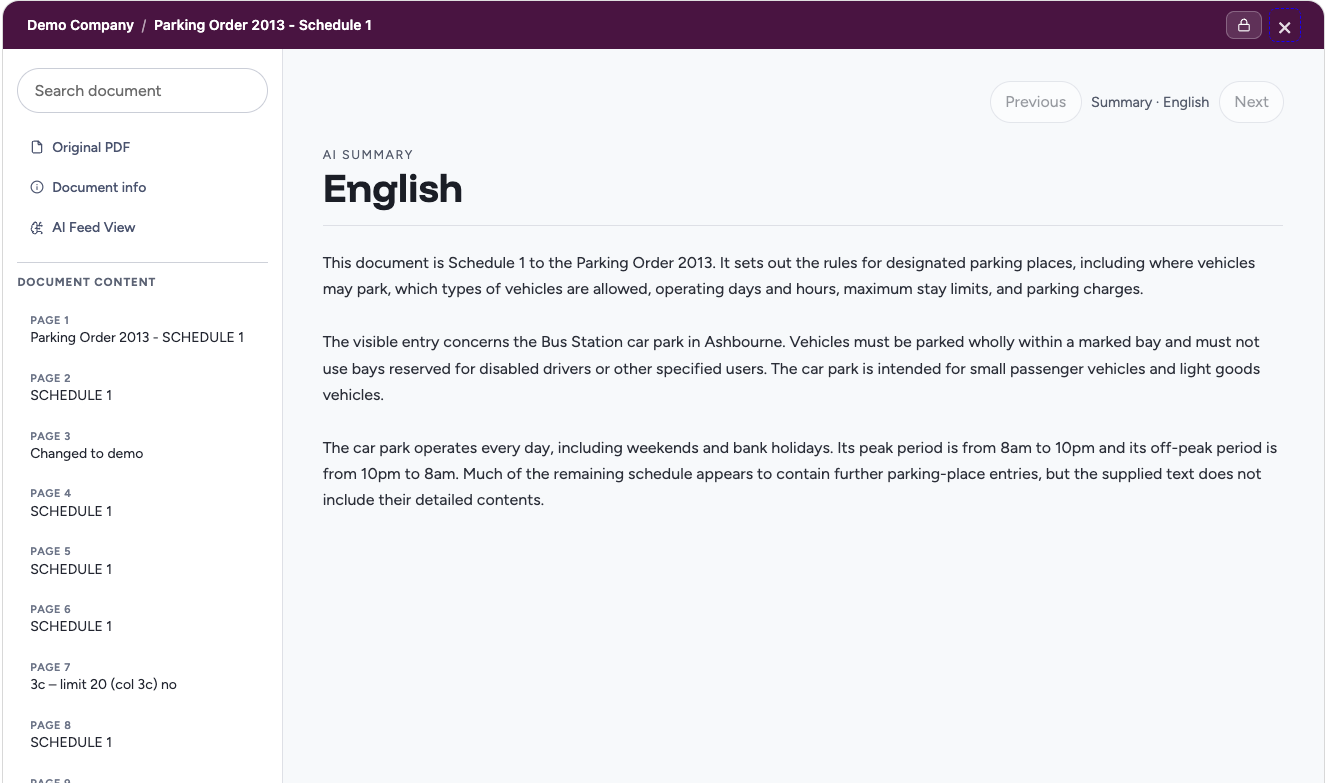
The Platform converts selected PDF information into clear, machine-readable HTML that AI can index quickly. PDFs are larger, slower to process and can have details skipped; converting their information does not establish that the source is accurate, current or complete.
2 views of a converted document show what AI receives in place of the PDF.
06Keep the historical record and make current information available.
In practice, retaining the relationship with the original information means keeping the original PDF for human visitors when it is the historical record. The PDF remains unchanged, showing that the earlier record is intact and correct.
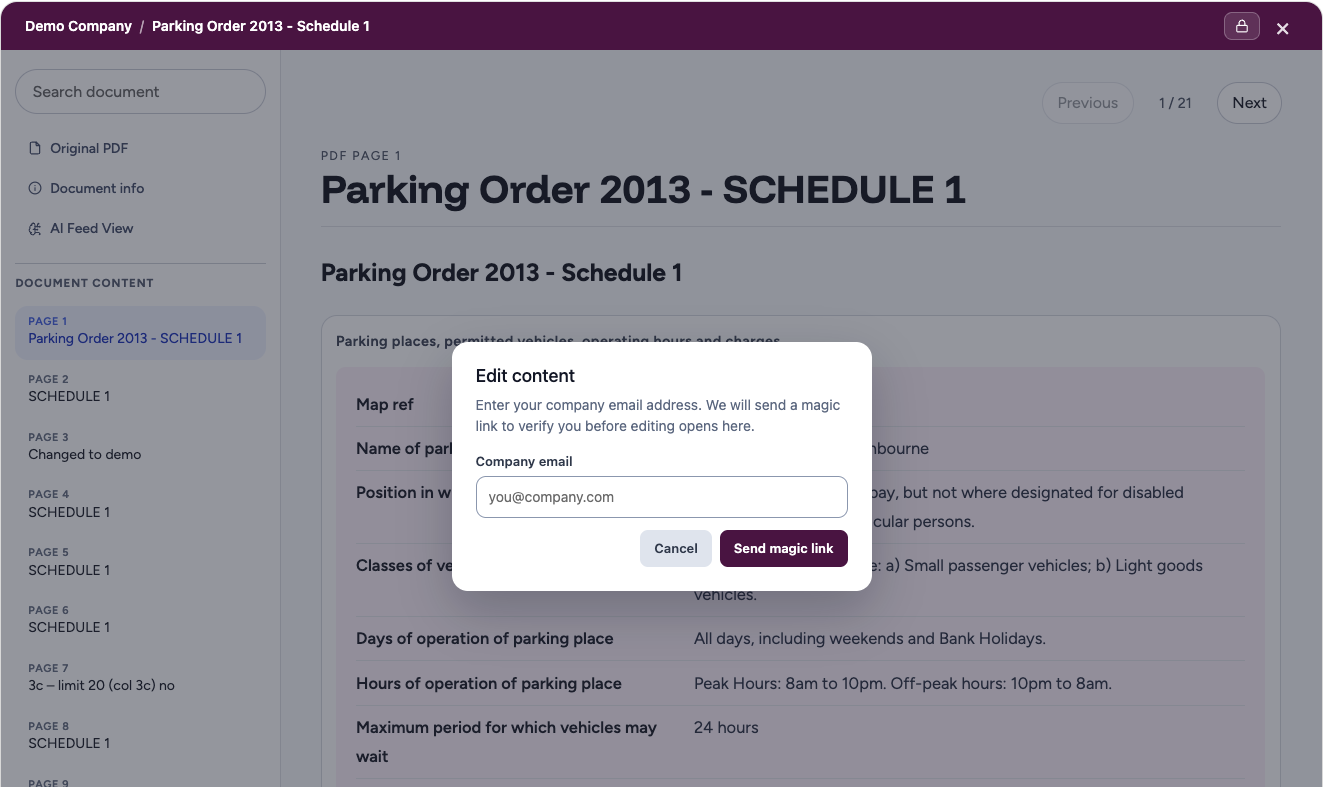
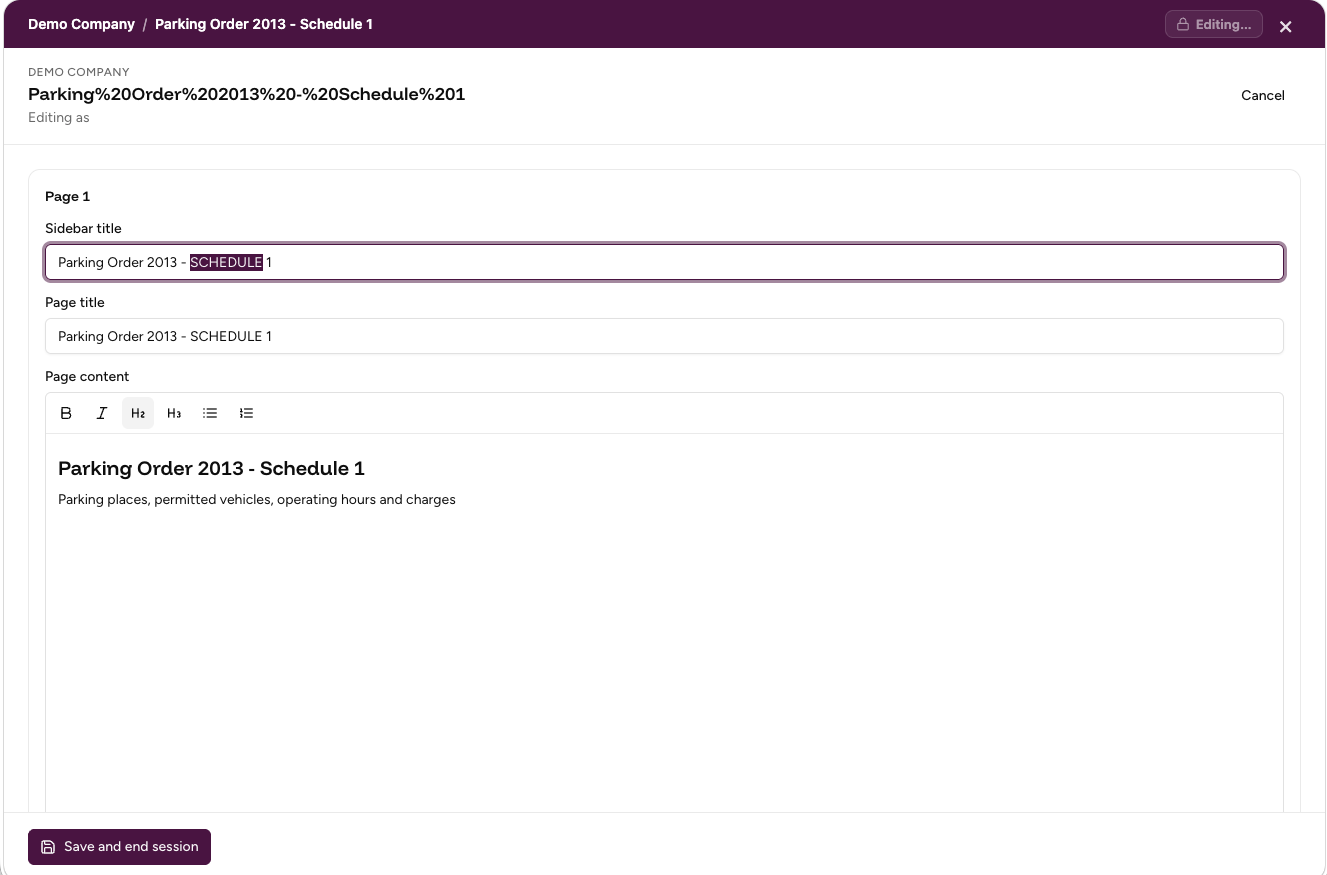
Current information appears in the converted HTML for AI. When a historical fact no longer applies, authorised colleagues without technical expertise can revise that information within a couple of clicks through a secure link. The revision appears in the HTML and is not presented as part of the earlier publication.
The HTML makes current facts available to AI without changing the historical PDF. This reduces misinformation risk but does not guarantee that misinformation will be prevented.
The revision takes 2 steps (where needed).
07Reduce storage, carbon, bandwidth and cost.
Some original PDFs must remain as historical records, while old and redundant PDFs can be removed and their HTML kept. An HTML version can use up to 130 times less storage than the corresponding PDF. Storage therefore falls across the collection even when required historical PDFs remain.
Less storage and more efficient delivery reduce carbon. Costs also fall when thousands of requests that would have served a PDF are served as HTML instead. On average, HTML uses 71 times less bandwidth than PDF.
08Another way to use the information.
PDFs can be difficult for people who use screen readers. HTML offers those visitors another way to reach the selected information and supports digital inclusion and accessibility. HTML also makes the information easier to read, index and use across different formats.
09Place within the wider AAAnow Platform.
PDF to HTML is part of Continuous Content Discovery and Mapping, or CCDM. CCDM forms part of the wider AAAnow Platform.
10Commonly asked questions.
Can PDFs we have already published influence AI answers about our organisation?
Yes. AI systems read PDFs and use their information when answering questions about an organisation. A PDF’s age does not prevent its information from shaping a current answer, whether it appears on the organisation’s own website or a site run by a partner or agent.
Can the Platform find PDFs beyond our own websites?
Yes, when those websites are within the agreed scope. The scope can include websites run by partners and agents. The Platform discovers, catalogues and indexes the PDFs it finds across those sites.
Why can a PDF look correct to a person but be interpreted incorrectly by AI?
Visual appearance can make the intended meaning clear to a person, but it does not confirm that the PDF’s titles, headings and structure present the information correctly to AI. The Platform checks those elements for each selected document before conversion.
What does AAAnow’s PDF authority research mean for our organisation?
PDF information can carry greater authority, trust and relevance when AI selects and uses information. AAAnow research found that AI assigned the same content 1.44 to 1.8 times the authority when it appeared as a PDF page rather than a web page. Old or incorrect PDF information can receive that weight too, which is why the PDFs already online matter.
Does the Platform convert all the PDFs it finds?
No. The Platform first discovers, catalogues and indexes the PDFs within the agreed scope. Only selected information is converted, so finding a PDF does not commit the organisation to converting it or the complete collection.
How does the Platform decide which PDF information to prioritise?
The Platform applies its proprietary algorithm to 3 factors: content value, user consumption and position on site. Those factors cover the value of the information, how people use it and where it appears on the site.
What changes when selected PDF information is made available as HTML?
Selected information appears as clear, machine-readable HTML that AI can index quickly. The HTML remains related to the original organisational information. In practice, a PDF needed by human visitors or as a historical record stays unchanged while current information appears in HTML. PDFs are larger files, take longer to process and can have details skipped.
What happens when a PDF must remain as a record but its information is no longer current?
The original PDF remains available to human visitors and stays unchanged, so the historical record remains intact and correct. The converted HTML contains the current information for AI without presenting the revision as part of the earlier publication. AI can therefore reach the current position in HTML without any change to the historical record.
Can authorised colleagues revise current information without technical expertise?
Yes. Authorised colleagues without technical expertise can revise the current information within a couple of clicks through a secure link. The revision appears in the HTML while the original PDF and its historical record remain unchanged.
What other benefits come from making selected information available as HTML?
HTML offers screen-reader users another way to access the information and supports digital inclusion and accessibility. It is easier to read, index and use across different formats. PDFs required as historical records can remain while old and redundant PDFs are removed and their HTML is kept. That HTML can use up to 130 times less storage than PDF. Less storage and more efficient delivery reduce carbon. When thousands of requests are served as HTML instead of PDF, costs fall because HTML uses 71 times less bandwidth on average.